
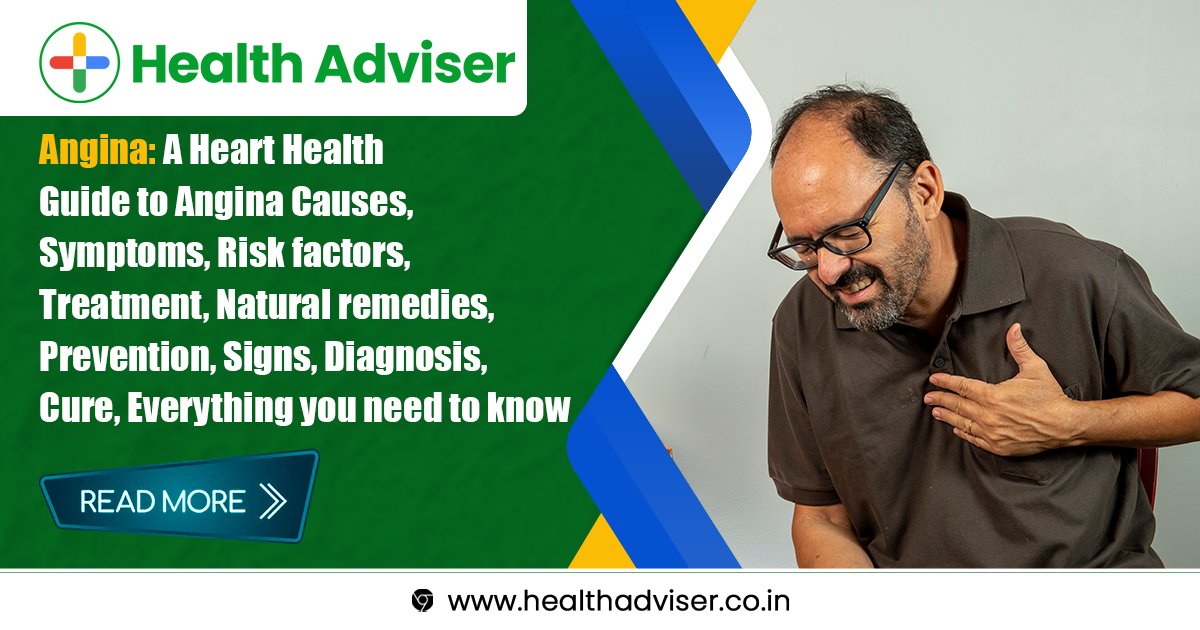
Learn exactly what Angina is Right Now!
Know what is Angina, symptoms of Angina, causes of Angina, Diagnosis, and treatment for Angina along with FAQs.
Introduction to Angina
Generally, we see middle-aged or old aged people getting chest pain or heart attack. It is caused due to Coronary Artery Disease (CAD). If one or more of your coronary arteries are blocked, in that case, there will be reduced blood flow to your heart from time to time, you may have angina.

Learn now what is angina and angina causes, symptoms, risk factors, medical treatment, natural remedies, prevention, signs, diagnosis, cure, everything you need to know more about angina.
What is the Angina?
Angina is chest discomfort or severe pain in the chest that spreads to the shoulders, arms, and neck. Angina is commonly caused by the inadequate blood supply to the heart muscle. Blood carries oxygen which helps the heart muscle to survive. When your heart muscle fails to get enough oxygen, it causes a condition called ischemia.
Causes of Angina
Most cases of angina are caused due to a build-up of fatty substances known as plaques. This resists the blood supply to the heart muscle and produces the symptoms of angina. The other causes of Angina include:
- Inadequate blood supply to the heart
- Asthma
- Pneumonia
- Muscle strain
- Stomach ulcer- Gastric Ulcer
- Bile stones
- In children, chest pain is not caused by heart
- Atherosclerosis
- Smoking to a high extent
Angina Triggers
- Walking briskly outside on a cold, windy, or humid day
- Hurrying with a heavy load
- Exerting after a heavy meal
- Working under a deadline
- Speaking in public
- Engaging in sexual activity
- Being worried, tense, or angry
Other, less common causes of chest pain include:
- Blockage of a major artery of the lungs (pulmonary embolism)
- Narrowing of a heart valve (aortic stenosis)
- Enlarged or thickened heart (hypertrophic cardiomyopathy)
- Sac Swelling around the heart (pericarditis)
- Tearing in the wall of the aorta, the largest artery in the body (aortic dissection)
Angina Symptoms
Chest pain is the symptom which affects people differently. You may feel:
- Chest pain
- Nausea
- Sweating
- Dizziness
- Fatigue
- Hotness of breath
- Aching
- Burning
- Discomfort
- Feeling of fullness in the chest
- Heaviness
- Pressure
- Squeezing
You are possible to have pain behind your breastbone, but it can spread to your shoulders, arms, neck, throat, jaw, or back. It’s possible to get the wrong idea about an aching or burning for heartburn or gas.
Men can feel pain in their chest, neck, and shoulders. Women can feel discomfort in their belly, neck, jaw, throat, or back. You may also experience shortness of breath, sweating, or dizziness.
Angina Risk factors
The following risk factors increase your risk of angina:
- Tobacco use: Angina can be caused due to chewing of tobacco, smoking and long-term exposure to secondhand smoke damages the interior walls of arteries including arteries to your heart allowing deposits of cholesterol to collect and oppose blood flow.
- Diabetes: Diabetes is the failure of the body to produce enough insulin which is a hormone secreted by your pancreas that allows the body to use glucose, a form of sugar from foods. Diabetes increases the risk of coronary artery disease, which leads to angina and heart attacks by increasing cholesterol levels.
- High blood pressure: Blood pressure is identified by monitoring the amount of blood your heart pumps and the amount of opposition to blood flow in your arteries. Eventually, high blood pressure arteries are damages by accelerating hardening of the arteries.
- High blood cholesterol or triglyceride levels: Cholesterol deposit can narrow arteries throughout your body with those that supply the heart. A high level of bad cholesterol, known as low-density lipoprotein (LDL) increases your risk of angina and heart attacks.
- Family history of heart disease: If any member in a family has coronary artery disease or has had a heart attack, it is a sign that you are at a greater risk of developing angina.
- Older age: Men above the age of 45 and women older than 55 are at greater risk than do younger adults.
- Lack of exercise: An inactive lifestyle leads to high cholesterol, high blood pressure, type 2 diabetes, and obesity. So it’s important to do some kind of exercise with the guidance of your doctor before starting an exercise program.
- Obesity: Obesity increases the risk of angina and heart disease because it’s related to high blood pressure, high blood cholesterol levels, and diabetes.
- Stress and Anger: Stress and Anger can be the cause of angina and heart attacks. Too much stress and anger can raise your blood pressure and narrow your arteries and worsen angina.
Complications of Angina
Angina can become a complicated problem in situations like doing some normal activities, such as walking, uncomfortable. However, the biggest complication in Angina is a heart attack.
Dos and Don’ts of Angina
- Do regular exercise. It increases the threshold of exertion that could precipitate angina, increases HDL cholesterol level, lowers blood pressure, decreases obesity and promotes collateral (alternative routes) circulation in the heart.
- Maintain ideal body weight.
- Take a diet rich in fresh vegetables, fruits, and polyunsaturated fatty acid.
- Take antianginal medicines regularly as per the instruction of your doctor.
- Take the antihypertensive, antidiabetic or lipid-lowering drugs regularly if prescribed and get your blood pressure or blood sugar checked frequently.
- Immediately consult your doctor in case of the danger signal.
Coronary Artery Disease (CAD)
The reduced blood flow to the heart muscle is commonly caused by a fatty substance called plaque builds up in arteries, blocking blood flow to the heart muscle. This is called Coronary Artery Disease (CAD).
This forces your heart to work with less oxygen and cause heart pain. There may be Blood clots in the arteries of the heart, which can also cause heart attacks. It could be dangerous if it is ignored and left alone.
Types of Angina
There are different types of angina:
Stable Angina: (Angina Pectoris)
It is the most common pain that occurs in many people. It generally lasts for a few minutes and goes away when you rest. It can be caused by any Physical activity or stress. It cannot be a heart attack but it can be a sign that you’re more likely to have one. If this happens to you tell your doctor without any delay.
Unstable Angina: This type of angina can attack while you’re at rest or not very active. The pain can be strong and long-lasting and come back repeatedly. It can be a signal that you’re about to have a heart attack, so you need to take doctor’s help right away.
Prinzmetal’s Angina: It is also called variant angina and it occurs in rare cases. It may happen at night time while you’re sleeping or resting. The heart arteries suddenly tighten or narrow and can cause a lot of pain. Sometimes it becomes life-threatening. You should get it treated immediately.
Stable Angina vs Unstable Angina
Unstable Angina
With unstable angina, also referred to the as acute coronary syndrome, chest pain and other symptoms of cardiovascular disease are of new onset, worsening, becoming more frequent or occurring with less exertion.
If this is your situation, your doctor may adjust drug therapy to stabilize symptoms or may pursue other forms of testing and monitoring.
Depending on the ongoing evaluation, you may be sent to the cardiac catheterization lab (or “cath lab”) for a heart catheterization and ultimately an angioplasty and/or a stent (procedures to open blockages in your arteries). Alternatively, if the blockages are more extensive or severe, you may be referred to a surgeon for bypass surgery.
Unstable Angina or a Heart Attack…
- Can happen anytime. Might happen when you are taking a nap or having a cup of coffee.
- May feel different than the pain or discomfort of stable angina.
- Is often more painful or severe and lasts longer than stable angina—more than a few minutes.
- May not go away with rest or use of angina medication.
Stable Angina
With stable angina, you have “predictable” symptoms – symptoms to which you have become accustomed. You have come to expect shortness of breath (more common in women than men), chest pressure, neck, jaw or shoulder pain when you engage in physical activity at various levels of intensity. When you stop the activity, symptoms also cease.
If you have stable angina, your care team will ask you questions and listen carefully to your answers to understand your
- Medical history
- Current symptoms and other current health conditions, such as diabetes and hypertension
Stable Angina…
- Is pain or discomfort similar to past episodes of angina with similar amounts of exertion and usually resolves in less than five minutes?
- Is chest pain or other symptoms that usually stop after you take medication or stop to rest.
- Is triggered by activities that make the heart work harder—physical and emotional exertion or stress, extreme temperatures, or a big meal.
Angina in Women
Women within the very small arteries that branch out from the coronary arteries more frequently develop heart disease. This is referred to as microvascular disease (MVD) and occurs particularly in younger women.

In general, the pain which is known as angina usually only starts when one is doing physical exercise and/or over exerts oneself, as it is then that the heart muscle needs the extra supplies of oxygen that are not delivered in sufferers of Angina.
In addition to physical exercise and exertion, there are 4 other conditions which you should be aware of, as being triggers of angina in women. The causes of angina in women are:
- Emotional stress in all its various shapes and forms, which are part and parcel of our day to day existences in the 21st century and which need to be kept under control.
- Extreme cold or heat, whether from natural climatic conditions or from the use of heaters and air conditioners.
- The consumption of heavy meals combined with the intake of alcohol, or the excessive drinking of alcohol on its own, without being accompanied by food.
- Cigarette smoke which, as we all already know, is a medical no-no for everyone.
Angina in Men
Men with angina are twice as likely to have a heart attack, and almost three times as likely to have a heart-disease-related death, than women with the same condition.

Angina is commonly believed to be more common in men than in women, but a study of more than 100,000 people with angina aged between 45 and 89 showed it to be equally common in both.
The causes of angina in men are:
- Emotional stress or severe occupational trust
- Extreme cold or heat,
- Consumption of heavy meals
- Excessive intake of alcohol
- Cigarette smoking.
- Excessive muscular activities such as heavy weight lifting, sexual activity etc.
Diagnosis of Angina
To diagnose angina, your doctor will do a physical exam and examine your symptoms. You’ll also be asked whether you have a family history of heart disease. Your doctor may order you for several tests to help confirm whether you have angina. The angina diagnosis tests include:
- Electrocardiogram (ECG or EKG): This test will help your doctor to find patterns among the heartbeats to see if the blood flow through your heart has been slowed or if you are having a heart attack.
- Stress test: Sometimes it is easy to diagnose angina when your heart is working harder. During a stress test, you are asked to exercise by walking on a treadmill or pedaling a stationary bicycle.
- Chest X-ray: This test takes the images of heart and lungs. This is to find other conditions that explain your symptoms of angina and to identify if you have an enlarged heart.
- Blood tests: If your heart has been damaged by a heart attack then certain heart enzymes slowly leak out into your blood. To test the presence of these enzymes Samples of your blood can be used.
- Coronary angiography: The X-ray machine continuously takes a series of images (angiograms), giving a detailed look at the inside of your blood vessels.
- Cardiac computerized tomography (CT) scan: In a cardiac CT scan, a machine rotates around your body and collects images of heart and chest. It also shows if any of your heart’s arteries are narrowed or enlarged.
- Cardiac MRI: The cardiac MRI produces detailed images of your heart’s structure and its blood vessels.
Treatment for Angina
The options available for angina treatment include lifestyle changes, medications, angioplasty or coronary bypass surgery. The aim of treatment is to reduce the severity of your symptoms and lower your risk of a heart attack and death.
If your angina is mild, all you need is making some changes in lifestyle. Even if your angina is severe, lifestyle changes like avoid smoking, staying calm and stress-free, exercising regularly, etc can still help.
If lifestyle changes alone don’t help your angina, you may need to take medications prescribed by the doctor.
Questions for your doctor:
The following are some of the basic questions which you have to ask your doctor.
- What’s the most likely cause of my symptoms?
- What kinds of tests will I need?
- Do I need to prepare for these tests?
- What treatments are available, and what do you recommend?
- What foods should I eat or avoid?
- What’s an appropriate level of physical activity?
- I have other health conditions. How can I best manage these conditions together?
- How often do I need to follow up with you about my angina?
- Is there a generic alternative to the medicine you’re prescribing me?
- Are there any brochures or other printed material that I can take home with me? What websites do you recommend visiting?
What to expect from your doctor?
The following are the questions which are likely to ask by your doctor:
- When did you first begin experiencing symptoms?
- Is it pain? Discomfort? Tightness? Pressure? Sharp? Stabbing?
- Where is the pain located?
- Does the pain spread to your neck and arms?
- How and when did the pain start?
- Did something specific seem to trigger the pain?
- Does it start gradually and build up or start suddenly?
- How long does it last?
- What makes it worse? Activity? Breathing? Body movement?
- What makes it feel better? Rest? Deep breath? Sitting up?
- Do you have other symptoms with the pain, such as nausea or dizziness?
- Do you have trouble swallowing?
- Do you often have heartburn? (Heartburn can mimic the feeling of angina.)
Prevention – Preventive Care to Angina
Learn now how to prevent angina.
Can angina be cured?
Is angina curable?
How to cure angina?
Yeah…you can prevent angina by making the same lifestyle changes and taking some self-care tips if you already have angina. These angina prevention tips include:
- Monitor and treat other health conditions, such as high blood pressure, high cholesterol, and diabetes that increase the risk of Angina.
- Talk to your doctor about starting exercise and increase your physical activity. The aim of moderate activity each week for 150 minutes.
- Limit alcohol consumption, if possible avoid it completely.
- Get an annual flu test to avoid heart complications from the virus
- If you smoke, stop smoking and avoid exposure to secondhand smoke.
- If you’re obsessed, talk to your doctor about weight-loss techniques.
- Have healthy food with limited amounts of saturated fat, lots of whole grains, and many fruits and vegetables and maintain a healthy weight.
- Because angina is often brought on by exertion, it’s helpful to take a break and rest.
- Avoid large meals which let you feel full.
- Avoid stress is easy to say, but try to find ways to get relaxed. Talk with your doctor about the techniques stress-reduction.
Angina and Exercise
Regular exercise is beneficial for Angina affected individuals due to its positive effect on many of the contributing factors, including high blood pressure and cholesterol, diabetes and obesity. In particular, Aerobic exercise increases blood and oxygen flow to the heart while at rest and when you’re doing everyday things like climbing stairs or carrying groceries. Following a well-designed program that you can stick to over the long-term is the key to maximizing the benefits of exercise.
Cure Angina with Exercise
Getting Started to Cure Angina with Exercise
- Talk with your health care practitioner before starting an exercise program and ask for specific programming recommendations.
- Take all medications as recommended by your physician.
- The goals of your program should be to improve cardiovascular fitness, increase muscle strength and endurance, and improve range of motion.
- Choose low-impact activities such as walking, cycling or water exercises, which involve large muscles groups and can be done continuously.
- If your fitness level is low, start with shorter sessions (10 to 15 minutes) and gradually build up to 20 to 60 minutes, three or more days per week.
- Perform light-resistance circuit training and whole-body range-of-motion exercises two to three days per week.
- Closely monitor your intensity level and stay within your recommended target heart-rate zone. Take frequent breaks during activity if needed.
Exercise Cautions
- Stop exercising immediately if you experience angina. Contact your physician in case of chest pain, labored breathing or extreme fatigue.
- Upper-body exercises may precipitate angina more readily than lower-body exercises because of a higher press or response.
- An extended warm-up and cool-down may reduce the risk of angina or other cardiovascular complications following exercise.
- If nitroglycerin has been prescribed, always carry it with you, especially during exercise.
- Avoid extreme weather conditions.
Home Remedies for Angina
There are several things which you can try at home in order to help ease mild angina, heart pain and prevent future occurrences. If it is severe angina, then it’s safe to follow the treatment given by the doctor. Some of the home remedies for angina are:
- Almonds: eating a few almonds or drinking a cup of almond milk may help to reduce the chest pain.
- Cold pack: It is a common getting a heart or chest pain due to muscle strain. In these cases, a person can have pain in the chest due to strain from exercise, other activities, or stress. In such situations, icing the area with a cold pack may help reduce swelling and stop the pain.
- Hot drinks: A hot drink may help to reduce pain.
- Garlic: Garlic is the best remedy for chest pain. Mix a clove or two of crushed garlic with a glass of warm milk. Instead of drinking the garlic, it’s better to chew the pieces to gain the maximum benefit.
- Lie down: When the pain in heart strikes, immediately lay down with the head elevated above the body may bring some relief.
Angina vs Heart Attack
The narrowing of the small blood vessels that supply blood and oxygen to the heart is called CHD. Angina is chest pain or discomfort which occurs when you do certain activities or feel stressed. It is often caused by poor blood flow through the blood vessels of the heart muscle.
If you have high blood pressure, diabetes, or high cholesterol, your health care provider may advise you to:
- Keep your blood pressure controlled most often to 130/80. Lower may be better if you have diabetes, kidney disease, stroke, or heart problems, but your provider will give you your specific targets.
- Take medicines to reduce your cholesterol.
- Keep your HbA1c and blood sugar at recommended levels.
Angina Management
A Plan to Manage Angina: Create a plan for managing your angina and it should include:
- What activities are OK for you to do, and which ones are not
- What medicines you should take when you have angina
- What are the signs that your angina is getting worse
- When you should call your provider or 9-1-1
Angina Natural Treatment
Living a Healthy Lifestyle
Some controllable risk factors for heart disease are:
- Drinking alcohol: If you drink, limit yourself to no more than 1 drink a day for women, or 2 a day for men.
- Emotional health: Get checked and treated for depression, if needed.
- Exercise: Get plenty of aerobic exercises, such as walking, swimming, or bicycling, at least 40 minutes a day, at least 3 to 4 days a week.
- Smoking: DO NOT smoke or use tobacco.
- Stress: Avoid or reduce stress as much as you can.
- Weight: Maintain a healthy weight. Maintain body mass index (BMI) between 18.5 and 24.9 along with a waist smaller than 35 inches (90 centimeters).
Eating a Healthy Diet
Good nutrition is important for your heart health because healthy eating habits will help you control some of your risk factors for heart disease.
- Eat plenty of fruits, vegetables, and whole grains.
- Choose lean proteins, such as skinless chicken, fish, and beans.
- Eat non-fat or low-fat dairy products, such as skim milk and low-fat yogurt.
- Avoid foods that contain high levels of sodium (salt).
- Read food labels and avoid foods that contain saturated fat and partially hydrogenated or hydrogenated fats.
- Eat fewer foods which include cheese, cream, or eggs.
FAQs of Angina
When to seek medical advice for Angina?
Seek for immediate help if you have the symptoms like Fever, Cough with yellow colored phlegm and Pain persists for more than 3 days.
Does angina mean having a heart attack?
Not necessarily. A single incident of angina is not a heart attack, but it does mean that you have a chance of having a heart attack.
Does angina become life-threatening?
Angina means an increased risk of heart attack and is often a major warning sign that heart attack can happen soon.
What lifestyle changes can help with angina?
Take the advice of your health care provider about changes you can make to improve your heart health. You may benefit from:
- Weight loss
- increasing your physical activity
- eating healthy foods and not overeating
- controlling stress in your life
- quitting smoking
- Drinking less alcohol
What should you do if you think you’re having angina for the first time?
Take rest until the angina discomfort has passed. Take the help of family or neighbors and make an appointment to see your GP straight away.
How can I differentiate the pain of angina from a heart attack?
It can be difficult because symptoms are similar to both Angina and heart attack. Any angina-like symptoms could be the onset of a heart attack. Heart attacks can be serious, so when chest pain or discomfort persists you should call to helpline immediately.
Can someone live a normal life with angina?
Many people can lead a normal life if they take self-care by taking medication and addressing their risk factors.
What to do to decrease the risk of developing angina?
If you are above the age of 40, you are entitled to a health check at your GP practice, which will assess your risk of angina. Ask your doctor what you can do to reduce your risk of angina.
Can angina go away?
If angina occurs due to any physical action, stop and rest or take your angina medicine immediately. The pain may go away in a few minutes.
What is the helpline number for Angina and chest pain?
If you have not been diagnosed with angina and the pain doesn’t go away or lasts longer than usual, call 999 immediately.
How would I know I had angina?
The symptoms you experience can confirm the Angina. Generally, the symptoms are ache or heaviness, or tightness, in the chest which can also be felt in the neck, jaw or arms and sometimes the back and stomach area.
How is angina treated?
Making some changes in lifestyle and medicine are the most common ways to control stable angina.